An ongoing research and performance project of audiovisual compositons based on an archive of urban registrations from the 1950’s to the 1990’s.
Composition / extracts of a performance at Studio GeOrgel.
Thanks to the city of Gelsenkirchen and the institute for the city’s history (ISG) for the permit to use the material, made possible with the financial help of the city of Gelsenkirchen and the LWL-Kulturabteilung as well as the kind permission to research the archive of home movies of the Ruhr area by the RVR.
„Platt (Low(german)) alive“ – giving a media reality to a dying language (Attention! external link to a site in lowgerman language: plattfilm is a plattform for videos of different kinds to preserve the dissapearing regional language.
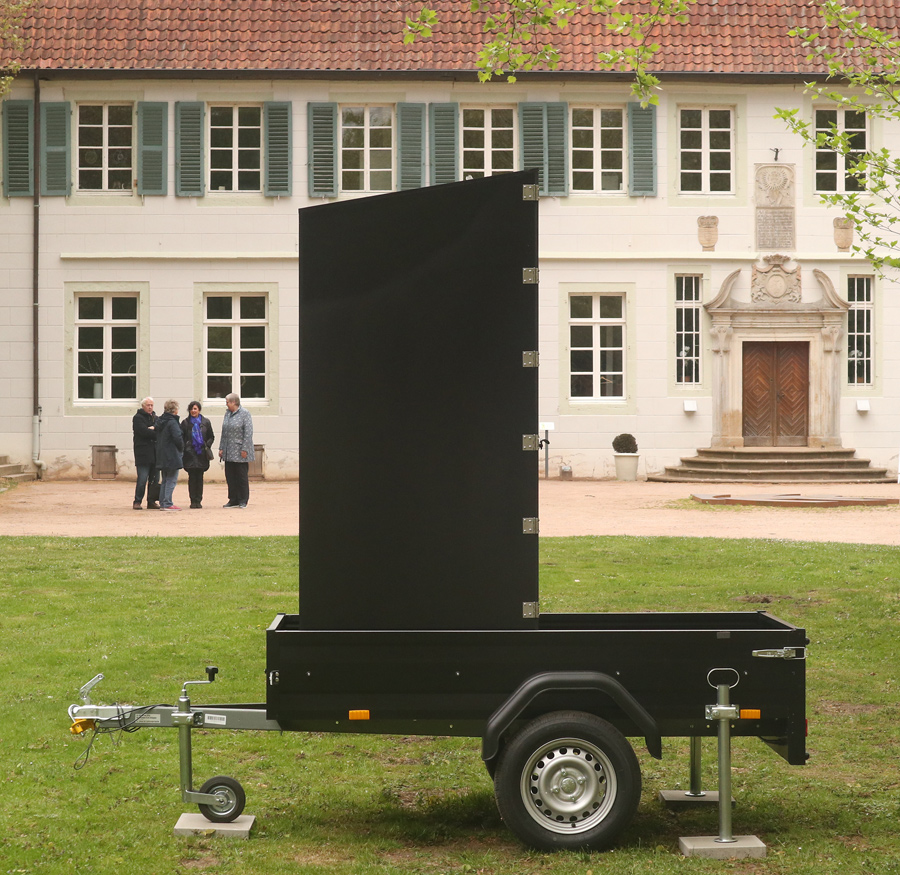
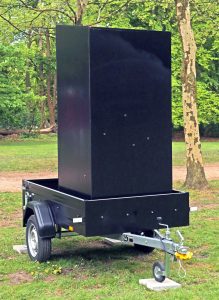
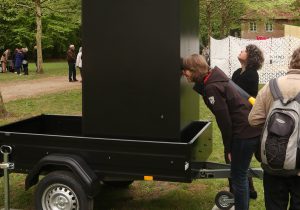
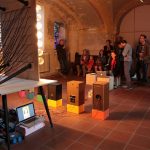
As an allusion to the seven deadly sins, 7 trailers with a small hut on it are sent on a journey to 7 places for 2 years. I designed the sin of PRIDE within this mobile exhibition as a somehow „cool-non-communicative“ vehicle that reveals some deeper insights on the second view …
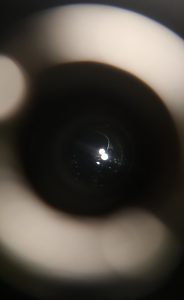
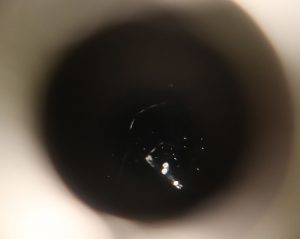
„Saligia-PRIDE“, trailer, wood, 50 fibre optic cables, iron handle, 5 spy holes, coated in black matte and partially glossy, 2019
Is a collaborative performance project with dutch and german visual artists, designers and musicians within the framework of the dutch-german artproject taNDem. It develops on aspects of „home“ and by this particulary the region called „Euregio“ where most of the artists live or come from. While the concept is to grow to a collective within the work, the process builds its own reality. From the initial idea of a random led choreography referring to John Cage’s ‚Europeras‘ to the introduction of many artists individual ideas and works, the community-building, the discussions of partially juxtaposed ideas of what performance means to the participants, the communication itself seems not only to be a challenge but an important basis of the whole project as an „artwork“ regardless the outcome.
Artists:
Tony Boiso, Stefan Demming, Renata de Frankrijker, Esther de Vries, Hanne Feldhaus, Jenny de Groot, Helena Hartmann, Mariëlle Meijerink, Frans Mensink, Michael ’Hille’ Rieken, Pier van Dijk, Laurens Westhoff
original idea / concept: S. Demming & M. Rieken; dutch lead partner for collaboration: Pier van Dijk;
Kunsthalle Weseke is an implementation of contemporary art shows in a westphalian village. In collaboration with Michael Rieken (Bremen), a program of 14 exhibitions in 2018 and 2019, performances and video presentations was presented to the village and the rural region.
in collaboration with / in Zusammenarbeit mit Michael Rieken
(deutsche Version unten)
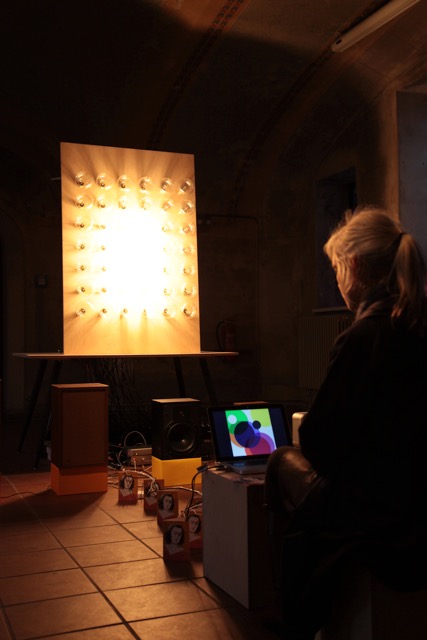
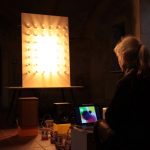
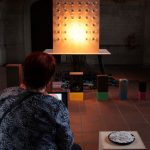
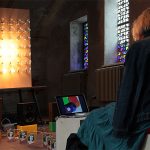
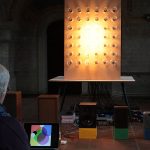
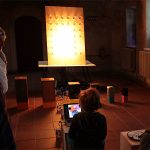
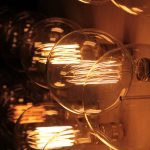
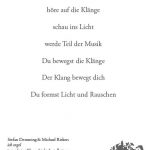
„Ich-Orgel“ (I-Organ) is a reactive sound and light installation as well as a tool for an an audiovisual performance. It creates electronic interpretations of organ samples by J.S. Bach. When a visitor activates the composition of 6 different tracks / speakers, he can navigate from one channel to another by moving his head slowly to one of the coloured circles that symbolize the sound layers. In addition, the body moments are adding up to a timebased portrait of the player that’s expressed in the 6×7-pixel-display expressed by 42 globe light bulbs. Watch a documentation of the av performance i organ – video.
„Ich-Orgel“ – Einladung zum meditativen Komponieren
„Ich-Orgel“ von Stefan Demming und Michael Rieken ist eine interaktive Klang-Licht-Installation, bei der Kameraaufnahmen von Besuchern in eine klangliche Komposition und skulpturale Lichtinstallation übertragen werden.
Indem Ausstellungsbesucher einem Feld aus Glühbirnen gegenübertreten, hauchen sie diesem durch ihre Anwesenheit Leben ein. Die Bewegungen haben dabei Einfluss auf eine Komposition aus Klängen, die Orgelwerken von J. S. Bach entstammen.
Frozen moments, 5’53’’, DV, col, stereo, PAL, 2002; music: Jan van Hasselt
A group photo at a baptism is stopped in the moment the flash goes off. A video about photography as a ritual and the simultaneity of speed and stillness of the electronic image. Everybody tries to look good for that moment, hoping to look good for eternity.
„See also texts of Frauke Ellssel and Elke Bippus on this work.