An ongoing research and performance project of audiovisual compositons based on an archive of urban registrations from the 1950’s to the 1990’s.
Composition / extracts of a performance at Studio GeOrgel.
Thanks to the city of Gelsenkirchen and the institute for the city’s history (ISG) for the permit to use the material, made possible with the financial help of the city of Gelsenkirchen and the LWL-Kulturabteilung as well as the kind permission to research the archive of home movies of the Ruhr area by the RVR.
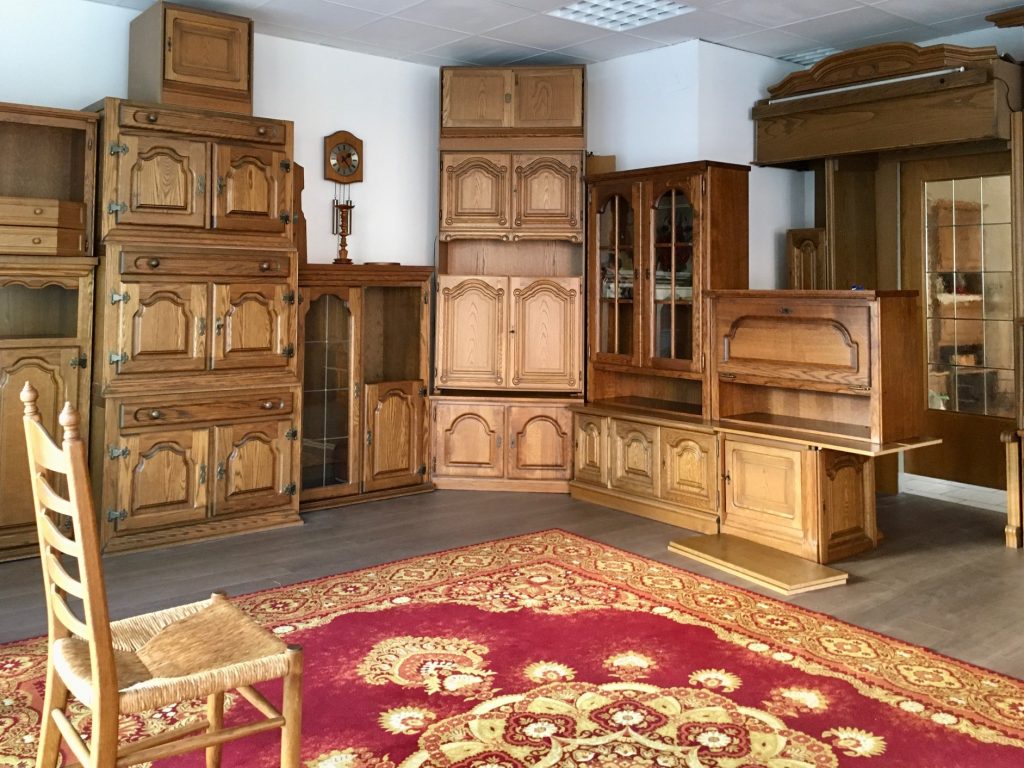
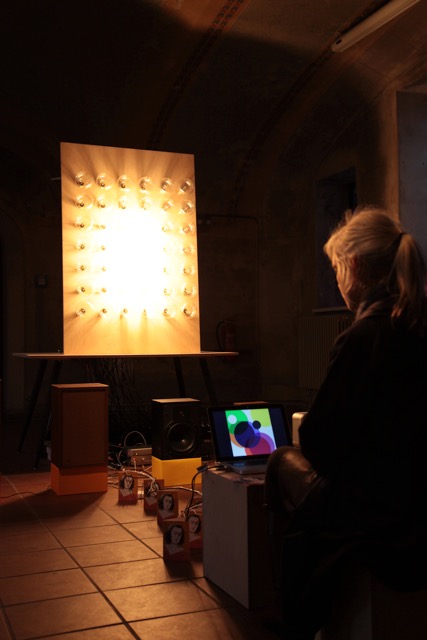
„GeOrgel“ is an installation with ten interactive sound drawers. The drawer serves to control the volume of the sound coming from it. The combination of different furnitures becomes a polyphonic instrument and a container for oral history. The installation refers as well to living room culture of the 1980’s as to the surrounding. People from the neighborhood were interviewed and asked if they can contribute a song to the installation. Visitors are allowed to open every case and can also contribute to the drawer’s contents. Furthermore, musicians and artists are invited to perform there. In 2023 „UpcycleTheStreet!“, a series of public interventions takes place in front of the GeOrgel.
The word „GeOrgel“ means something like someone playing an organ badly – but in slang, it refers also to the (failing!) starting of the car engine. The style of the furniture is „Oak rustic“ but it’s also kind of an unofficial follower of the „Gelsenkirchen baroque“. As such, it refers to the city as the location where it’s built and presented. Allthough situated in the west, it’s nowadays Germany’s poorest city according to people’s income situation.
Aus ausgewählten Archivbeständen einen performativen Zeit-Raum als Videokonzert und/oder Installation mit Mehrfachprojektion und Live-Audio zu entwickeln ist das Anliegen dieses Projekts künstlerischer Forschung. Die rhythmisierten Streifzüge zeigen ausschnitthaft und in wechselnden Setups, wie Westfalen und vor allem die Region Münsterland „früher“ aussahen. So war die Landschaft beispielsweise von ausgedehnten Moorgebieten geprägt, deren Umbau zu Ackerflächen in einem Film aus den 1960er Jahre veranschaulicht wird. S. Demming erzeugt dafür mit einem 4-Spur-Videosampler live eine audiovisuelle Kompositon aus transformativen Loops mit unterschiedlichem Footage aus 90 Jahren. (mehr Infos s.u.).
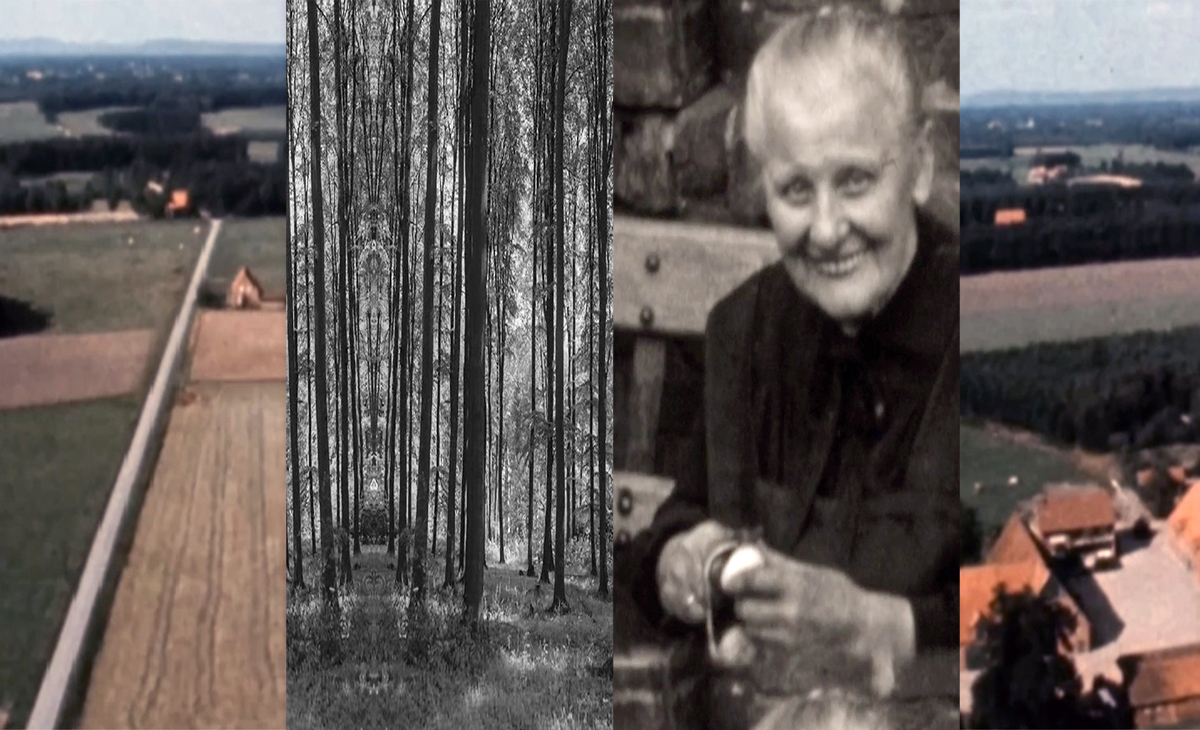
„In Archiven“ – Videocollage (still, SD), footage: Hermann Reichling, 1938
Während Michael Rieken sich intensiv mit ausgewählten Fotos des Naturschutzpioniers und Naturfotografen Hermann Reichling (1890 – 1948) auseinandersetzt und Audios aus einem Tierstimmenarchiv für Soundscapes nutzt, konzentriert sich Stefan Demming auf filmische Zeugnisse Reichlings und denen einiger weiterer Filmemacher. Neben „Kulturfilmen“, die die Region beschreiben und bewerben sollten, zeigen Amateurfilmer vor allem den Alltag: aus heutigem Blickwinkel betrachtet, erscheint das Dorfleben noch „ursprünglich“, der industrielle und technische Fortschritt eine Errungenschaft, spätere Entwicklungen und Folgen der intensiven Nutzung des Landes sind noch nicht im öffentlichen Bewusstsein. Die Archivfunde sind auch Zeugnisse des technischen Stands ihrer Zeit und verweisen auch auf die Intentionen ihrer Produzent:innen.
Das Projekt „IN ARCHIVE eintauchen (Westfalen) – eine Zeitreisenveranstaltung“ basiert vor allem auf Recherchen in den Archiven des LWL- Medienzentrums sowie des LWL-Archivs für Alltagskultur in Münster. Hinzu kommen in Westfalen angefertigte Klangaufnahmen aus dem Tierstimmenarchiv des Museums für Naturkunde Berlin sowife Bewegtbilder und Klänge aus dem eigenen Archiv der Künstler.
6.+7.10. 2023 im DA Kunsthaus Kloster Gravenhorst,6.+7.10. 2023 im DA Kunsthaus Kloster Gravenhorst,6.+7.10. 2023 im DA Kunsthaus Kloster Gravenhorst,Dorfszene, Nottuln 1950Dorfszene Ramsdorf 1969Dorfszene, Nottuln 1950Reichling Wald (Filmstill, MR)Reichling Wald (Filmstill, MR)Reichling Horizont in der Bearbeitung von MR (Ausschnitt)auf Schloss Sendenauf Schloss Senden„In Archiven …“ – Projektion in einen alten Kamin von Stefan Demming, Schloss Senden„In Archiven …“, Installationssichten und Stills aus unterschiedlichen Filmen aus dem Archiv des LWL-Medienzentrums (bearbeitet)
Zwischen begehbarer Installation, medialer Oper und Videokonzert sind Besucher:innen eingeladen, das sich oft veränderte Setting bei einer Tasse Tee zu erleben. In unterschiedlichen Tempi und Wiederholungen komponieren Demming & Rieken bewegte Klang-, Landschafts- und Menschenbilder in einem sich wandelnden Zeitfluss. Dabei werden die Bestände meistens in Ausschnitten und Bearbeitungen präsentiert. Im Fokus stehen weniger Aspekte der lückenfreien Dokumentation und wissenschaftlichen Objektivität, sondern vielmehr die subjektiv-eklektische Auswahl und der ihnen zugedachte Rhythmus.
Trailer zu „IN ARCHIVE eintauchen“ (Westfalen), weitere VLM-Remix-Beispiele s. unten.
„Aus den medialen Zeugnissen der regionalen Vergangenheitentwickeln wir eine audiovisuelle Reise. Können wir aus der Vergangenheit lernen – bricht das „gute Leben“ zusammen, wenn wir einen Teil unseres Wohlstandes aufgeben? Wie reich erscheinen wir, wenn wir die Entbehrungen früherer Epochen bedenken! Welche aktuellen Praktiken wären in der Vergangenheit oder in einem Archiv besser aufgehoben?“
Demming & Rieken arbeiten mit Unterbrechungen seit 2001 an verschiedenen audiovisuellen Installationen und Projekten künstlerisch und kuratorisch zusammen, zunächst an der HfK Bremen, seit 2018 auch an einer „LandKULTUR – anders“ in der KHW (bis 2020) und dem AkA (aktuell).
Intro basierend auf Footage von Hermann Reichling, der 1938 Vögel im damals noch grösseren Münsterländer Moor beobachtete.
Remix mit VLM – VideoLoopMachine, Footage aus dem LWL-Medienzentrum, Filmnummer 19 „Wie die Zeit vergeht“, Amateurfilm mit Sterbeanzeige des Priesters Wilhelm Hackfurth vom 30.06.1961 abgefilmt
Nottuln, 1950 bis 1952, von Johannes Weber aufgenommene Szenen rund um das Dorf, den Alltag, die Freizeit: zwei kurze Einstellungen eines Waldspaziergangs in amateurhafter Aufnahmetechnik sind weiter ineinander verwoben und dienen im Projekt als Teil einer raum-zeitlichen Inszenierung. „Eine Episode nur“, Videoskulptur/Loop mit Footage aus „Schicksale einer Landschaft“ (1958)
EN
Archival Ramblings: TimeTravel on october 6th&7th 2023 at DA Kunsthaus Kloser Gravenhorst; oct 20th at Schloss Senden
We are developing a performative space with multiple projections, live audio and changing setups. The forays into selected archives show excerpts of what the Münsterland region looked like „in the past“. There were many moors here, for example, whose conversion to farmland was described in a 1960s cultural film. Village life still seems original, industrial and technical progress an achievement. In different tempos and repetitions, moving images of landscape and people are composed in a changing flow of time. The archival finds are also evidence of the technical status quo of their time and also point to the intentions of their creators. Between walk-in installation, media opera and video concert, visitors are invited to view them with us over a cup of tea.
Stefan Demming’s collaboration with Michael Rieken (and possibly others) is based on research in the archives of the LWL Media Centre and the LWL Archive for Everyday Culture in Münster.
„From this we develop an audio-visual journey into the past… Can we learn from the past – does the „good life“ collapse when we give up part of our prosperity? How rich we appear when we consider the deprivations of previous eras! What current practices would be better off in the past or in an archive?“
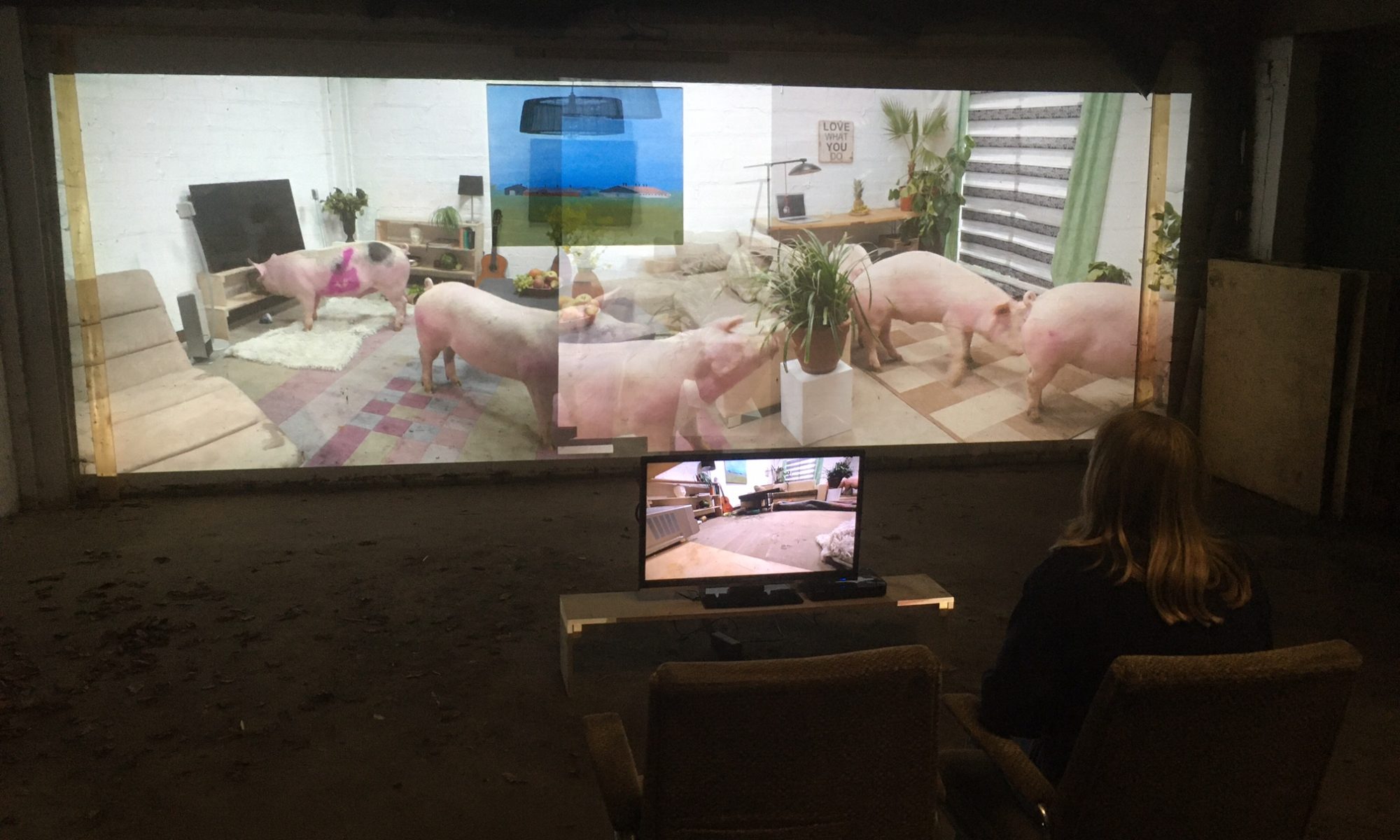
by Stefan Demming in collaboration with Harko Wubs: 3 video installation as a double projection, 1 monitor, 1 screen 80x100cm, seating furniture; 4K / HD, stereo, 12.23“ (Loop), 2022
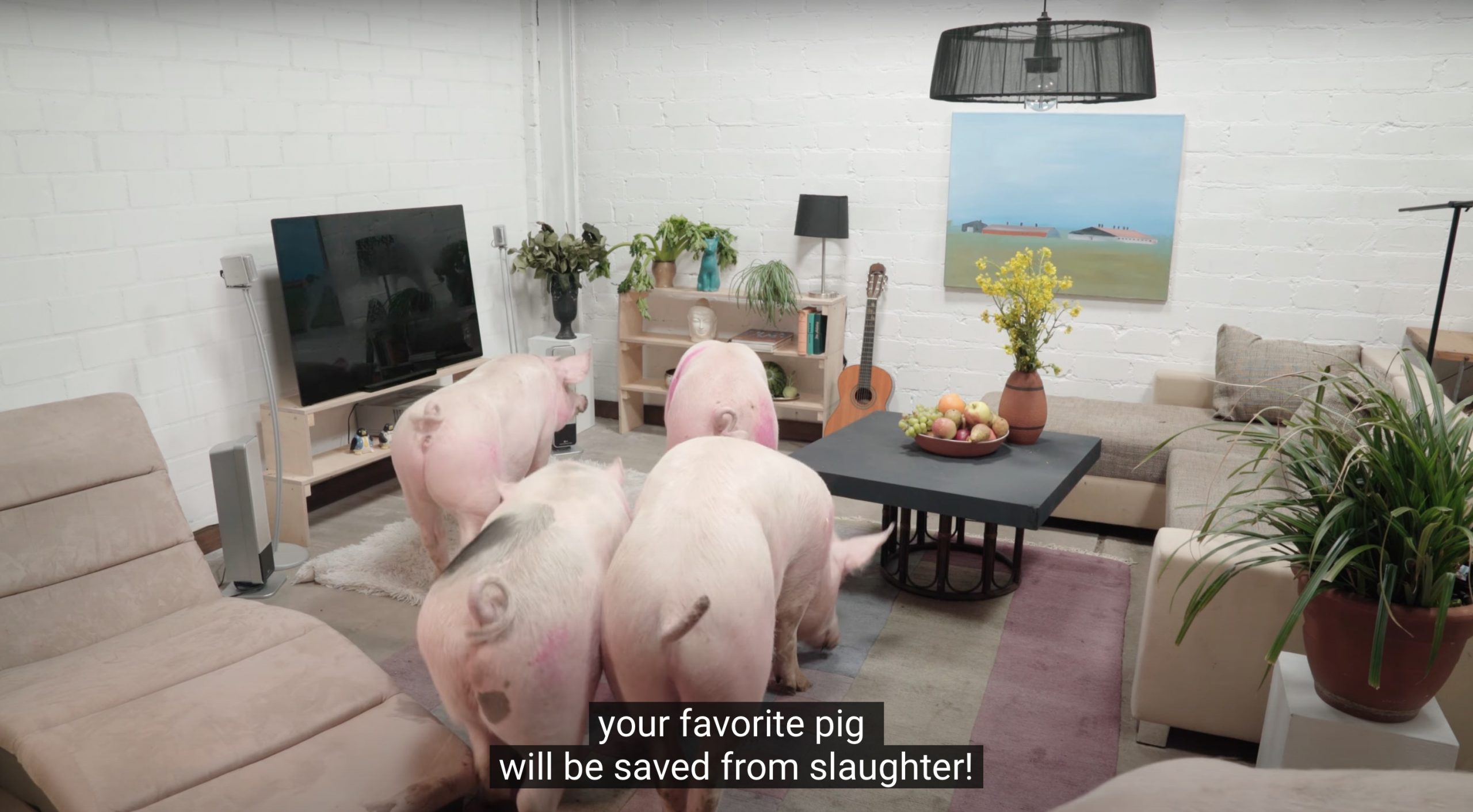
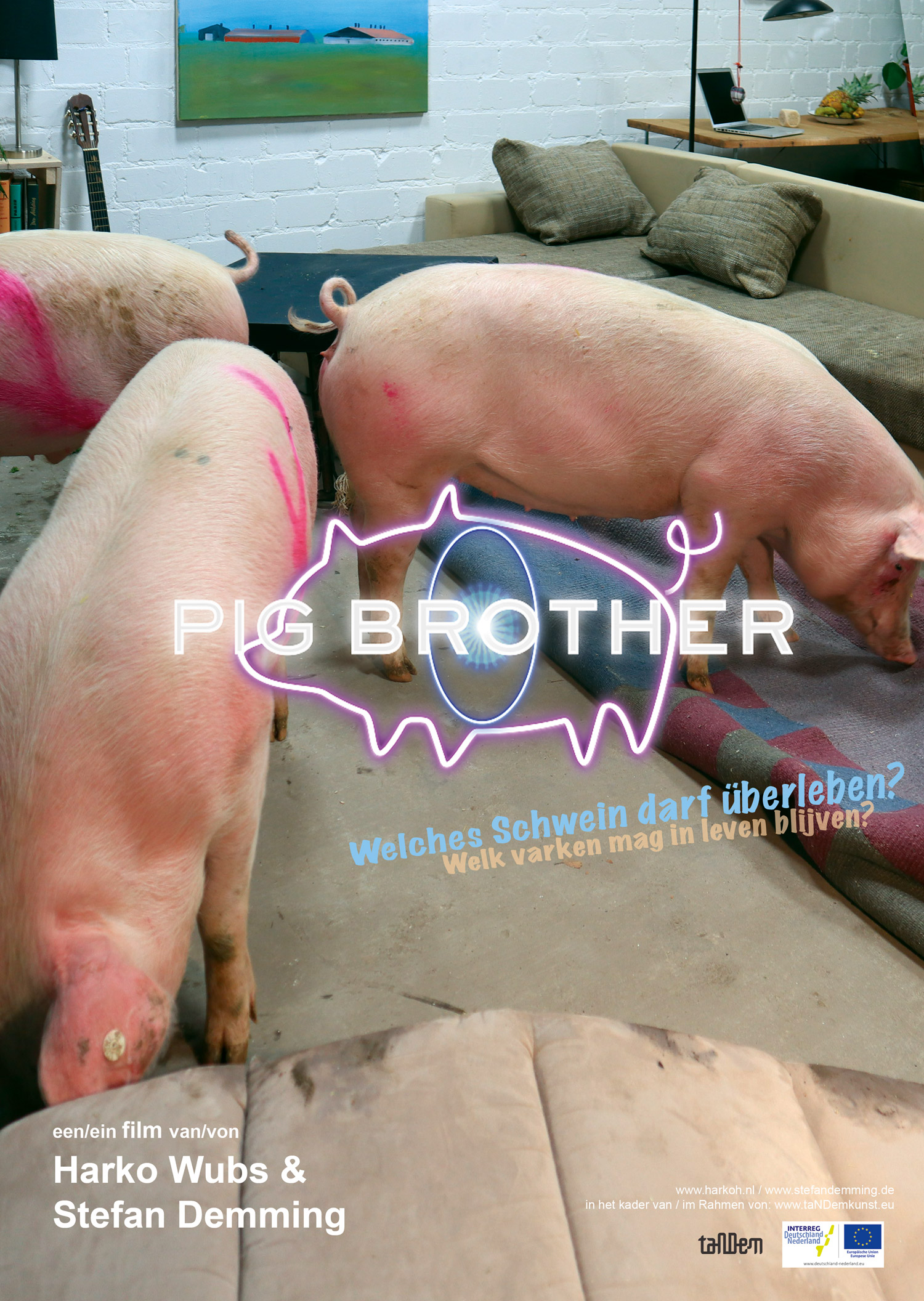
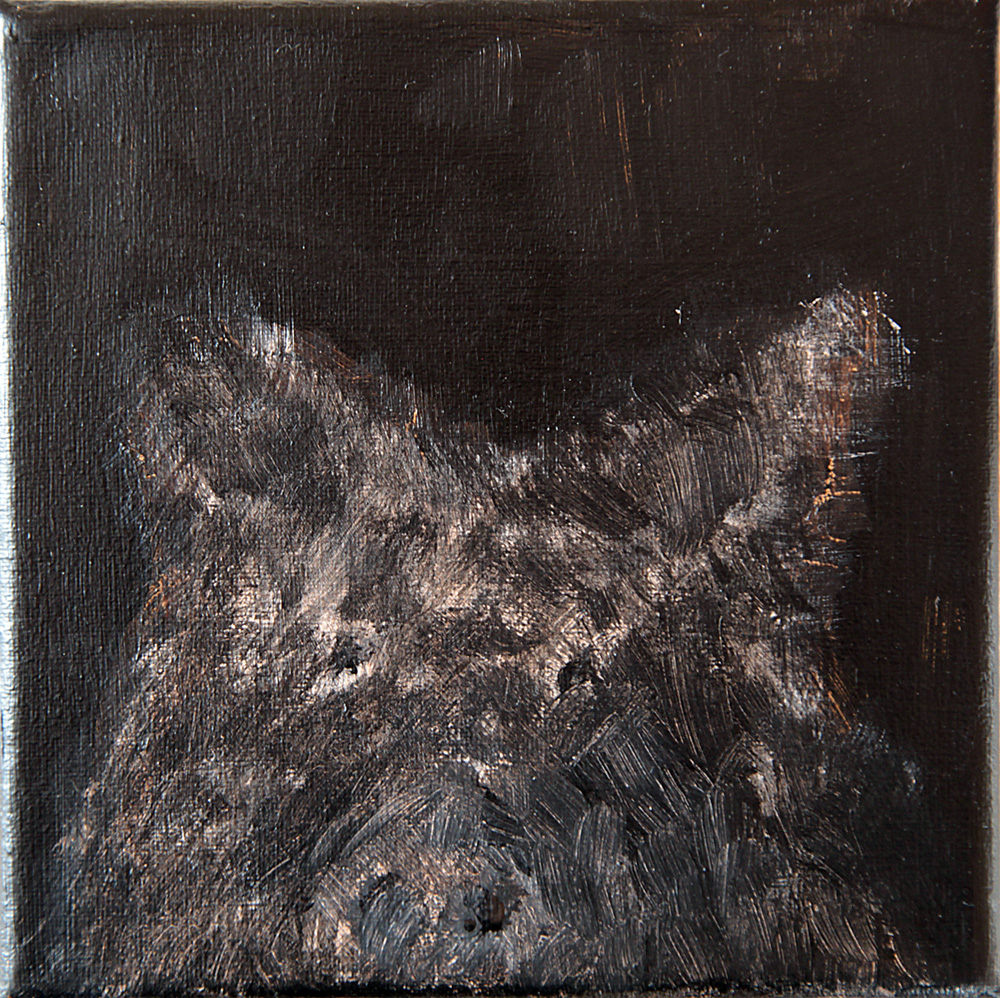
As part of a German-Dutch art project, Stefan Demming and Harko Wubs realized a video project as a kind of experimental setup with live pigs. This should enable to see the pig as an individual being. By inviting 5 pigs into a human living room and filming them we can clearly see them being alive. While the resulting short film „Pig Brother“ (9′, 2022) is conceived as a narrative and fictional and, based on the reality show, ironically suggests the rescue of one of the pigs by the viewer’s favor, the video installation „Pig Prother“ invites you to watch how the pigs act in the living room. The synchronized double projection shows the set and the actors in life size. The original painting of a landscape with fattening stables from the set hangs in the appropriate position on the wall. Visitors can take a seat on the living room furniture in the room and also view the pigs in close-up on a monitor, which were taken with various Go-Pro cameras during the shoot. The five pigs were among the few of the country’s 24 million pigs that were allowed to spend part of their short lives outdoors. In front of the cameras, their curiosity proves that they are intelligent animals.
A video by Harko Wubs & Stefan Demming, 2022 9 min, 4K, col. stereo, german with english subtitles
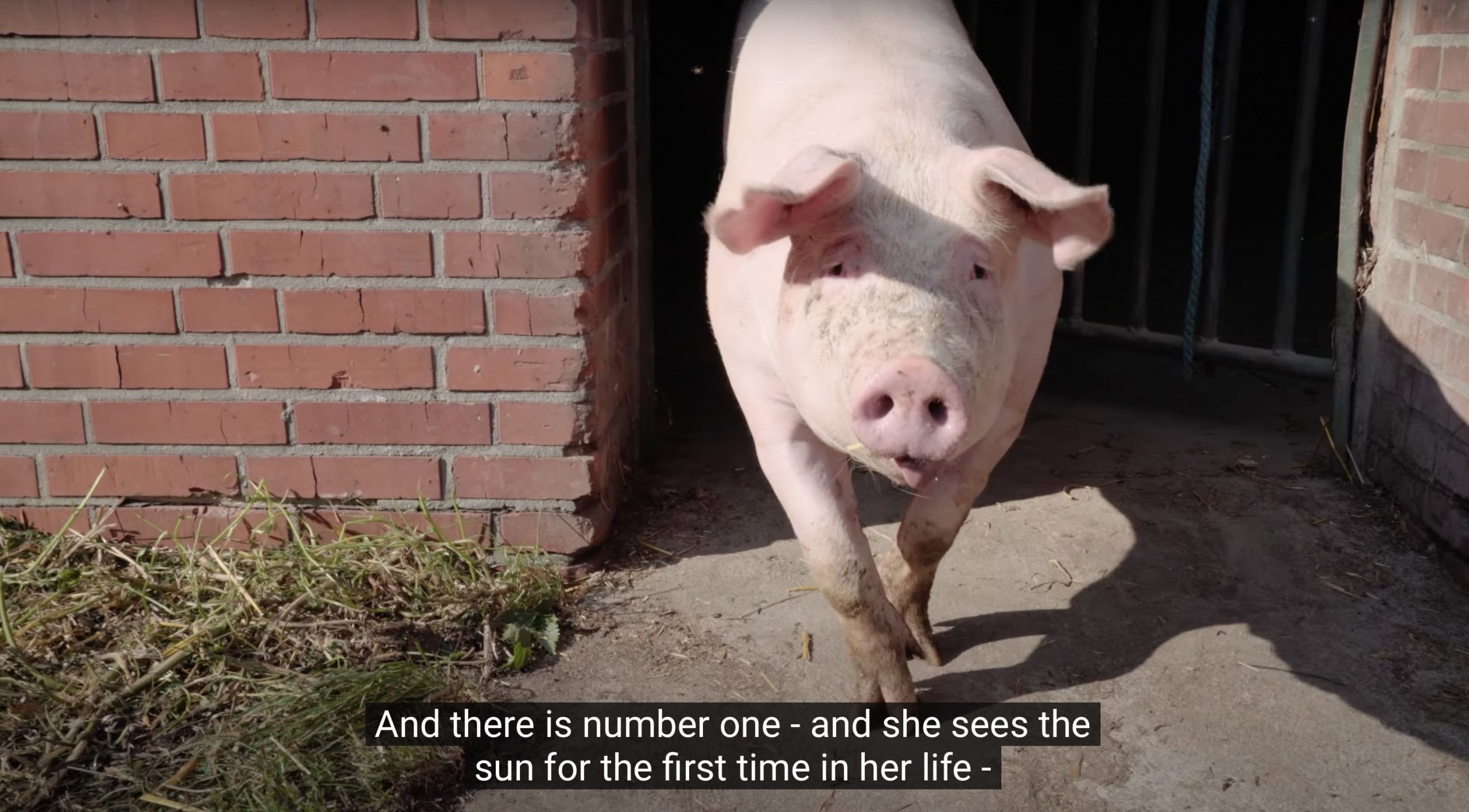
From the deepest dungeons of society through the spotlights of the studio to every living room: Five chosen pigs from the bio-industry are allowed to lead a luxurious ‚human life‘ in the Pig Brother house. From here they are observed by the TV-watching public. They can vote for their favorite pig and it will be spared from slaughter. Will the pigs compete for man’s favor now that they are in the center of human attention?
Pig BrotherintroPig BrotherPoster and stills from the video PIG BROTHER
AkA is an acronym for „studio for cultural affairs“ in german and it’s similarity with „a.k.a“ for „also know as“ was chosen by intention.
Together with Michale Rieken we realize a series of artistic interventions in public space, new forms of exhibitions and concerts as well as workshop-like projects that invite people to take action. It all takes place in an around a former bakery since 2018 know as „Kunsthalle Weseke„.
Next to our own artistic practise we invite artists to create site- and context specific work. Next to the general concept of AkA and the project management, there’s the following projects among my own contributions:
„Platt (Low(german)) alive“ – giving a media reality to a dying language (Attention! external link to a site in lowgerman language: plattfilm is a plattform for videos of different kinds to preserve the dissapearing regional language.
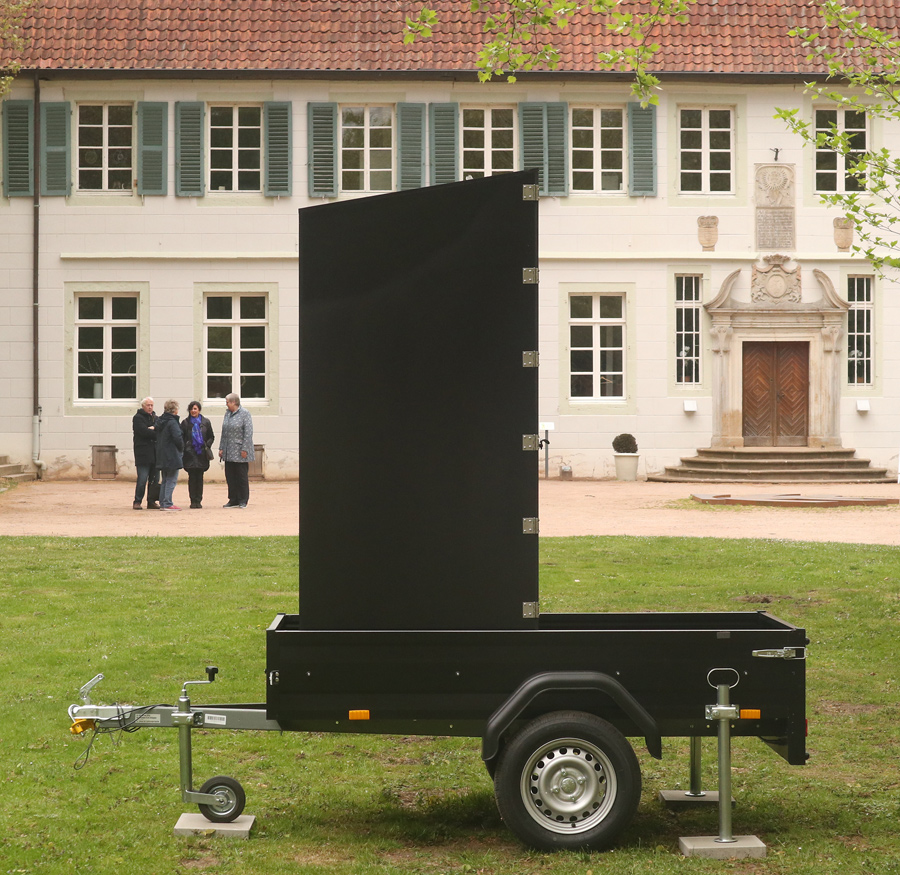
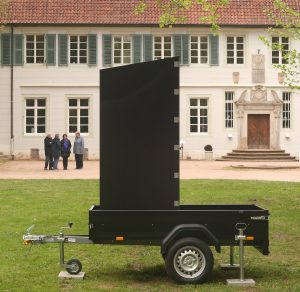
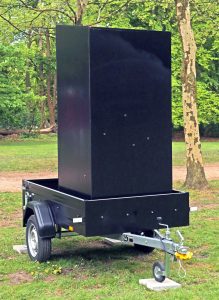
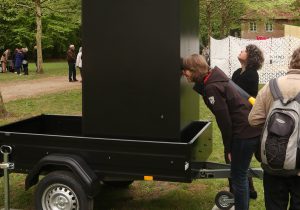
As an allusion to the seven deadly sins, 7 trailers with a small hut on it are sent on a journey to 7 places for 2 years. I designed the sin of PRIDE within this mobile exhibition as a somehow „cool-non-communicative“ vehicle that reveals some deeper insights on the second view …
„Saligia-PRIDE“, trailer, wood, 50 fibre optic cables, iron handle, 5 spy holes, coated in black matte and partially glossy, 2019
Is a collaborative performance project with dutch and german visual artists, designers and musicians within the framework of the dutch-german artproject taNDem. It develops on aspects of „home“ and by this particulary the region called „Euregio“ where most of the artists live or come from. While the concept is to grow to a collective within the work, the process builds its own reality. From the initial idea of a random led choreography referring to John Cage’s ‚Europeras‘ to the introduction of many artists individual ideas and works, the community-building, the discussions of partially juxtaposed ideas of what performance means to the participants, the communication itself seems not only to be a challenge but an important basis of the whole project as an „artwork“ regardless the outcome.
Artists:
Tony Boiso, Stefan Demming, Renata de Frankrijker, Esther de Vries, Hanne Feldhaus, Jenny de Groot, Helena Hartmann, Mariëlle Meijerink, Frans Mensink, Michael ’Hille’ Rieken, Pier van Dijk, Laurens Westhoff
original idea / concept: S. Demming & M. Rieken; dutch lead partner for collaboration: Pier van Dijk;